The Theater of Sleep
A Zen Perspective on Letting Go

A metaphor for falling asleep
Here is a brilliant and evocative metaphor of my conscious awareness for falling asleep:
We often treat falling asleep as an act of will, something we must do or achieve. But we cannot force sleep any more than we can force our body to float on water. Sleep is not an action; it is a surrender.
Assume I refer to myself as a one-room theater building (the vessel) AND the theater director (the observer).
-
The theater: one room with no seats for the audience, just me (the director of the show) and the stage.
-
The Stage: Consciousness / Awareness.
-
The Actors: Thoughts, memories, internal commentary.
-
Lights, Sound, Background: Sensory inputs, bodily sensations, ambient environment.
-
The Director: The ego, the "I", the central controller, deciding who gets the spotlight and which script to follow.

I am managing the level of action on the stage, engaging with actors coming up onto the stage (Thoughts, memories, internal commentary), while lights, background and sound (Sensory inputs, bodily sensations, ambient environment) are active independently.
The uniqueness of this stage is that only one actor at any time can be under the spotlight on the stage. There are, however, few back seats in the dark for actors-in-queue to sit quietly.
There are of course many moments when there is NO actor under the spotlight. Just a peaceful stillness, few backdrop lights, breath, warmth, sounds etc.
When I lie down and attempt to sleep, the director usually keeps trying to direct:
-
"Actor #4 (Tomorrow's To-Do List), get off the stage!"
-
"Sound engine, turn down the heart rate!"
-
"Lighting, dim the mental imagery!"
To align precisely with both Zen insight and sleep neurobiology, the transition to sleep is not just the intermission when the curtains come down, falling asleep is more profound.
Here is how falling asleep happens in this theater:
1. Falling Asleep is Not Intermission, It’s the Departure of the Director
An intermission implies the audience applause, stays seated, the director stays in the control booth taking notes, and everyone is just waiting for Act II.
Falling asleep is actually the moment the director leaves the building.
As long as the director is actively cueing actors or trying to quiet the stage, the show is still running. To surrender in this context means the director steps down from the podium, walks out of the theater, and trusts the building to manage itself.
Falling asleep requires a fundamental shift: the Director must “step down”.
2. What Happens to the Stage, Actors, and Crew?
When the director walks away, the theater doesn't instantly go dark; it transitions through distinct phases:
Hypnagogia (The Pre-Sleep Stage): With the director gone, the actors stop following a script. Random, surreal actors wander onto the stage—strange visual snippets, nonsensical thoughts, sudden auditory fragments. Because you are no longer "managing engagement," these thoughts appear without context, mingle freely, and dissolve.
-
Light Sleep: The background music slows down. The house lights dim to near-black. The actors step off the stage entirely because there is no audience/director to perform for.
-
Deep Sleep (Slow-Wave): The stage, the lights, the sound, and the actors vanish completely. There is no show, no theater, no director. Just unmanifest stillness.
-
REM Sleep (Dreaming): The theater suddenly powers back up, but without the director. The actors set pieces, and lighting run entirely on an automated, spontaneous script generated by the house itself. You witness or experience it, but the rigid, analytical "managing director" remains offline.
3. When Does the Curtain Come Down?
The curtain coming down is the actual mechanism of sleep onset (the thalamic gating in the brain, which cuts off sensory input from reaching the cortex).
However, the curtain cannot drop as long as the director is standing on stage holding the ropes, trying to force it down.
The paradox of sleep, and Zen surrender, is that the curtain drops automatically, but only after the director stops directing.
By relinquishing the urge to manage which thoughts step onto the stage, you stop giving them energy. The actors realize no one is directing them, they quiet down, the theater grows dim, and the heavy velvet curtain falls on its own accord.
Surrendering to sleep does not mean force-closing the theater or abruptly lowering the curtain. It simply means leaving the control booth.
In Zen, to surrender is not to forfeit or give up; it is the wisdom to step out of the way and trust the natural order of the vessel.
To sleep well, we do not need to master the art of controlling our thoughts, we only need to learn the art of letting go, “walking out of the theater”.
End of Show.
Have a restful sleep.
See you again when waking up.

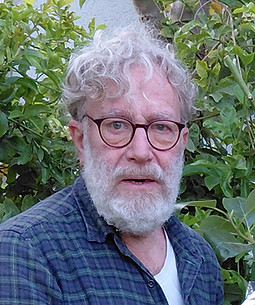


© You are welcome to share this text for personal use. Please credit: Dr. Michael Striem.
Disclaimer: These reflections on my life and were shaped through conversations between human intuition and machine intelligence.
ChatGPT and Perplexity served as a companion in organizing thoughts, illuminating connections, and identifying relevant scholarly paths.
The vision, meaning, and philosophical direction remain entirely mine (M.S.), while the clarity of expression owes much to this unique and joyful collaboration. Please help me correct mistakes, which human and machines do.


