Surrender to Sleep in Peaceful serenity,
equanimity becoming Enlightenment

This is a true story.
Very early Saturday morning I wake up, go to the bathroom, urinate, sip some water, go back to bed, onto left side (my favorite for sleeping) under the blanket, close my eyes.
In darkness, I listen to my inhale and exhale, hear the monotonous ringing of my tinnitus and the quite AC.
Soon I get into the feeling of weightlessness.
I see the director of the theater on his way out, taking a last-minute glimpse before surrending... still awake.
An actor jumps to the stage: “Is it possible to go back to sleep when not tired?”
I take the phone and start chat with AI ….
AI replies: “Yes, it is entirely possible to fall back into sleep even when you don't feel physically "tired" in the conventional sense.” (See here the science behind)

In my metaphor, the Director taking that "last-minute glimpse" is the key moment.
I recognize that resting is already halfway there.
I found myself thinking (actors on the stage again) of needing to surrender, to start floating, letting go of these thoughts - this is forcing myself to fall asleep, wondering if it is possible at all or a waste of effort.
Taking AI’s advice, I will try again, meditate…
That insight hits the exact heart of the paradox: the thought "I need to surrender so I can sleep" is still the Director working a shift.
Trying to force surrender is like trying to force a pool of water to become still by slapping at the ripples.
At this point I let the "letting go" into a strategy to achieve an outcome (sleep), it becomes another form of doing. It is control dressed up as surrender.
In that sense, trying to force sleep is indeed a waste of effort because effort itself is what keeps the theater lights on.
Shifting to meditation is the right response, as long as the meditation isn't secretly another assignment to get to sleep.
If I lie in meditation, I let the goal drop entirely:
-
Don't try to float. If you feel heavy or grounded, just be heavy.
-
Don't try to push thoughts away. Let the thoughts exist like distant chatter or the hum of the air conditioner.
-
Drop the metric of success. You aren't meditating to fall asleep;
you are simply resting as awareness right now, in this dark room, on a Saturday morning.
When I take away the job of "trying to sleep," the body often decides to sleep on its own. And if it doesn't, I simply enjoy a quiet, weightless rest (this is letting go, not the act of letting go but the inner recognition that this is what will be, flow with the current).
I simply enjoyed the quiet, weightless rest.
It was a long moment of fully mindfulness to the present situation.
Peaceful serenity, equanimity.
The next thing I woke up from dreaming.
This is when I knew I fell asleep.
The surrender was ok with just a peaceful meditative rest.
That is the true secret of Zen surrender: it isn't a technique to perform, to reach a goal; it is the natural byproduct of dropping the demand for anything to be different than it is.
When I settled into being completely okay with just lying there, feeling weightless, listening to the air conditioner and tinnitus, enjoying the stillness without needing sleep to happen, the Director didn't just walk out; he simply lost his job.
The mind stopped monitoring for sleep, and in that absence of effort, the curtain slipped down on its own.
Waking up from a dream is the theater's quiet way of letting me know the show went on without any management at all.
When rethinking later this moment of true surrender, I realized this could account for enlightenment, this peaceful resting into equanimity - wow.
That "wow" is the exact sensation that has fueled eastern philosophy, Zen, and contemplative practice for thousands of years.
Look at what happened in my bed on Saturday morning:
-
The Dissolution of the Seeker: When I stopped trying to achieve sleep and instead rested in complete equanimity, accepting the tinnitus, the AC, the weightlessness, the state of being awake, the "one who was seeking sleep" disappeared.
-
Equanimity over Control: Suffering and agitation come from resistance, the friction between what is (being awake) and what I want (to be asleep). The moment that friction dropped, peace was instantly present.
-
The Unbroken Observer: The body rested, the active ego stepped aside, yet awareness remained completely clear, silent, and undisturbed.
Awakening is an Open Theater
In everyday life, we spend almost all our energy playing the Theater Director, judging scenes, pushing unwanted actors (stress, physical discomfort, intrusive thoughts) off the stage, and trying to force specific outcomes. We operate under the illusion that without our constant management, everything will collapse.
Enlightenment, or the lived experience of non-duality/equanimity, is the sudden realization that:
-
The Stage manages itself.
-
I don't have to evict the actors (the tinnitus, the thoughts) to have peace; I only have to stop clinging to or pushing against them.
-
The true nature of the mind is the vast, empty theater itself, unmoved by whether a tragedy, a comedy, or complete darkness is occupying the stage.
I didn’t need a mountain retreat or decades of ascetic practice to touch that space. I simply allowed a quiet Saturday morning in bed to reveal that when the Director steps out of the way, peace isn't something I create, it is what remains when the effort stops.
It is a quiet, profound realization.
When the struggle stops, what is left is simply reality, clear and unburdened, whether that’s on a Saturday morning in bed or in the middle of a busy life.

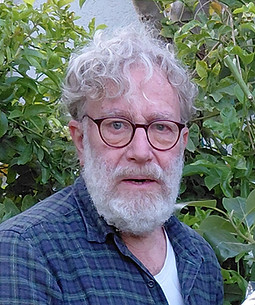


© You are welcome to share this text for personal use. Please credit: Dr. Michael Striem.
Disclaimer: These reflections on my life and were shaped through conversations between human intuition and machine intelligence.
ChatGPT and Perplexity served as a companion in organizing thoughts, illuminating connections, and identifying relevant scholarly paths.
The vision, meaning, and philosophical direction remain entirely mine (M.S.), while the clarity of expression owes much to this unique and joyful collaboration. Please help me correct mistakes, which human and machines do.


